A) the limits of choices of genes within a species
B) the inability to compromise
C) the consequences of random mutations
D) the consequences of inbreeding
F) All of the above
Correct Answer

verified
Correct Answer
verified
A) a genetic bottleneck
B) sexual selection
C) habitat differentiation
D) the founder effect
F) A) and D)
Correct Answer
verified
Correct Answer
verified
A) frequency-dependent selection
B) evolutionary imbalance
C) heterozygote advantage
D) neutral variation
F) A) and B)
Correct Answer
verified
Correct Answer
verified
A) rapid reproduction
B) sexual reproduction
C) mutation
D) changes in chromosome numbers
F) B) and C)
Correct Answer
verified
Correct Answer
verified
A) no selection
B) no genetic drift
C) no gene flow
D) random mating
F) C) and D)
Correct Answer
verified
Correct Answer
verified
A) Mutations caused major changes in rodent physiology over time.
B) Mutation led to increased genetic variation.
C) Mutation caused genetic drift and decreased fitness.
D) Mutation caused the fixation of new alleles.
F) A) and C)
Correct Answer
verified
Correct Answer
verified
A) is created by the direct action of natural selection
B) arises in response to changes in the environment
C) must be present in a population before natural selection can act upon the population
D) tends to be reduced when diploid organisms produce gametes
F) All of the above
Correct Answer
verified
Correct Answer
verified
A) a bird has a beak of a particular size that does not grow larger during a drought
B) changes in allele frequencies in a population occur over generations
C) gene flow evenly transfers alleles between populations
D) individuals within all species vary in their phenotypic traits
F) None of the above
Correct Answer
verified
Correct Answer
verified
A) Methylated DNA should become fixed in the gene pools of bacterial species.
B) Nonmethylated DNA should become fixed in the gene pools of bacteriophages.
C) Methylated DNA should become fixed in the gene pools of bacteriophages.
D) Methylated and nonmethylated strains should be maintained among both bacteria and bacteriophages, with ratios that vary over time.
F) A) and D)
Correct Answer
verified
D
Correct Answer
verified
A) 0.25
B) 0.50
C) 0.75
D) 0.125
F) B) and D)
Correct Answer
verified
Correct Answer
verified
A) selection
B) genetic drift
C) gene flow
D) no mutation
F) A) and C)
Correct Answer
verified
Correct Answer
verified
A) 0.08
B) 0.09
C) 0.70
D) 0.50
F) C) and D)
Correct Answer
verified
D
Correct Answer
verified
A) new mutations that occurred in the preceding generation.
B) genetic drift.
C) the reshuffling of alleles in sexual reproduction.
D) environmental effects.
F) None of the above
Correct Answer
verified
C
Correct Answer
verified
A) sexual dimorphism was evolving over time in these species
B) intrasexual selection seems to have occurred in both species
C) stabilizing selection was occurring in these species concerning larynx size
D) selection was acting more directly upon genotype than upon phenotype
F) None of the above
Correct Answer
verified
Correct Answer
verified
A) descent with modification
B) change in the number of genes in a population over time
C) survival of the fittest
D) inheritance of acquired characters
F) A) and C)
Correct Answer
verified
Correct Answer
verified
A) 16%
B) 32%
C) 40%
D) 48%
F) All of the above
Correct Answer
verified
Correct Answer
verified
A) directional selection
B) stabilizing selection
C) disruptive selection
D) sexual selection
F) None of the above
Correct Answer
verified
Correct Answer
verified
A) 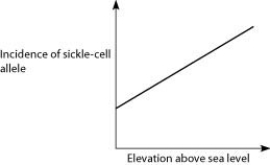
B) 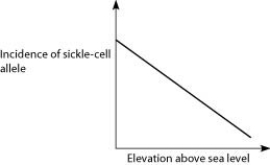
C) 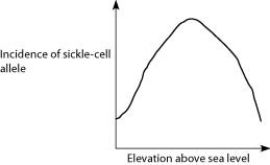
D) 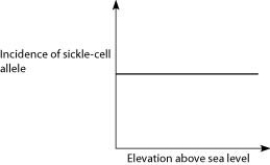
F) C) and D)
Correct Answer
verified
Correct Answer
verified
A) 0.09
B) 0.49
C) 0.9
D) 9.0
F) A) and C)
Correct Answer
verified
Correct Answer
verified
A) population bottleneck and Hardy-Weinberg equilibrium
B) heterozygote advantage and stabilizing selection
C) mutation and natural selection
D) founder effect and genetic drift
F) A) and B)
Correct Answer
verified
Correct Answer
verified
Showing 1 - 20 of 64
Related Exams